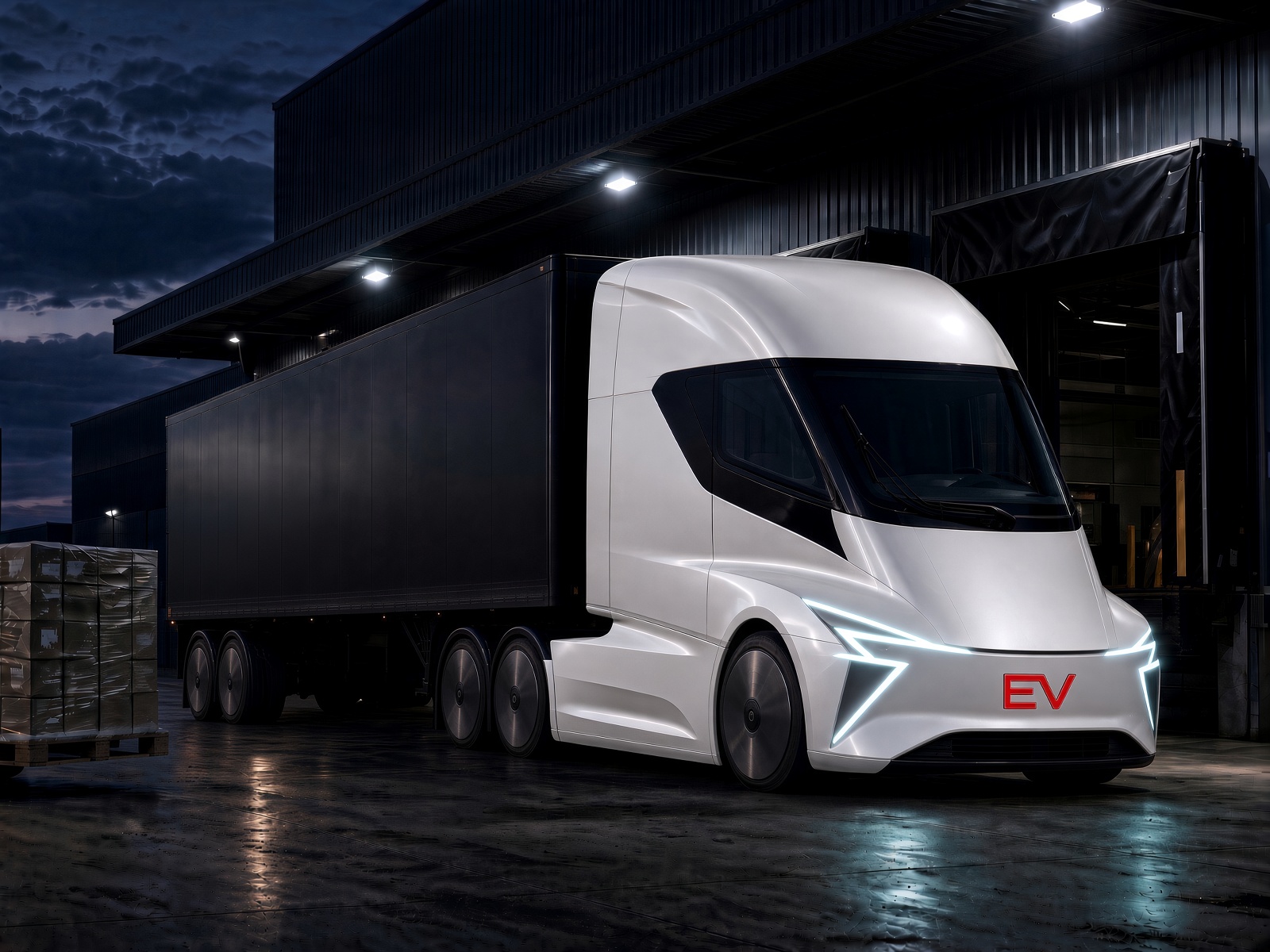
Brokers already know who in their book talks about sustainability. Most of that talk never becomes a tender, because the next load still goes out on the diesel board you have used for twenty years.
That is not a values problem. It is a coverage problem. An electric class-8 tractor will not take Fontana to Phoenix if dispatch cannot see a megawatt-class stop on the way. Post the freight on a diesel-only board and you will get diesel. Post it where the charger is on the map, and the fleets that can actually run it will see it.
This is not a campaign. It is a coverage change on lanes you already sell: California, Nevada, Arizona. I-10, I-15, I-40, the Inland Empire, the ports, Vegas, Phoenix.
California, Nevada, and Arizona lanes that can run electric today
California. Inland Empire, Fontana, Bloomington, Vernon, San Bernardino, Colton, and the Ports of Los Angeles and Long Beach. Public megawatt stalls in Bloomington and Vernon. Private MCS in San Bernardino. Greenlane public commercial charging in Colton. If you already sell Southern California truckload, this is the first place to post electric-ready freight.
Nevada. Las Vegas freight off I-15 from the Inland Empire. Same corridor, same drivers, now with MCS-class charging on the California side of the lane. Post the Inland Empire–Las Vegas loads you already have.
Arizona. Phoenix via I-10 from the LA Basin. Fontana to Phoenix is the example brokers already understand. Charge on the California end, deliver in Arizona. That is a Scope 3 move a shipper can put in a report this quarter.
Why these three states first
The Southwest is the only region right now where a broker can look at a live load and say, with a straight face, that MCS-class charging exists on the common freight corridors.
Public megawatt stalls are open in Bloomington and Vernon. Private MCS sits in San Bernardino. Greenlane's public commercial site is in Colton. Those are not nationwide. They are here. So the freight that should move first is here too: LA Basin to Phoenix, Inland Empire to Vegas, ports to the desert, anything that already runs I-10 or I-15 with a driver who needs a real break, not a hope.
If your customer ships those lanes and has a zero-emission or Scope 3 line in a report, you are leaving money and a relationship on the table by only posting diesel.
What to tell the customer
Keep it short.
You already haul their freight. Some of those lanes now have megawatt charging a class-8 electric tractor can use. If they have a Scope 3 target, this is one of the few truckload moves they can put on paper this quarter. You will post the load on EV LoadBoard, with origin, destination, rate, and the charger on the route. They do not need a five-year fleet program. They need one lane that can actually finish.
That conversation is better than a sustainability PDF.
Use AI on the book you already have
You do not need a data team. You need a list and a prompt that is not allowed to invent.
- Export a working list from your TMS or CRM. Company name, city, the lanes you already cover for them (especially anything touching CA, NV, AZ), industry, and any notes from RFPs, QBR decks, or green-freight language they have sent you. A spreadsheet is enough. Two hundred rows is enough.
- Open ChatGPT, Claude, or whatever your office already pays for. Paste the rows in batches. Paste the instruction in the next paragraph with them.
- Sort the sheet. Keep anyone with a real citation and a 4 or 5 who already gives you freight in this region. Drop the rest. You are not building a marketing database. You are picking ten accounts you can call this week.
- Call the top ten. Do not send a newsletter. Ask which of their CA / NV / AZ loads they would be willing to tender as electric-capable this month. Have one specific lane ready — origin, dest, typical rate — so they are not designing a program on the phone.
- Post that load on EV LoadBoard the same day. All-in rate, weight, commodity, pickup window. The board shows road miles and charging on the route. That is the whole product. If they want to keep using you as the broker, they still can. You are the desk. You just stopped hiding the electric option.
Instruction to paste: You are helping a freight broker. For each company, search only public sources (sustainability reports, CDP, SEC climate notes, press, CARB or state filings). Tell me if they have a stated Scope 3, zero-emission transportation, EV truck, or science-based target. Quote a short phrase and give the year and URL. If you cannot find a public source, say no public target found. Do not guess. Then score 1-5 for how relevant this is to truckload freight in California, Nevada, or Arizona.
If the model cites something you cannot open in a browser, throw it out. A wrong Scope 3 claim will embarrass you in front of a customer who writes those reports for a living.
What not to do
Do not wait for the shipper to "build an EV program." The charging on I-10 is already more real than most programs.
Do not post a 1,200-mile cross-country load and call it electric-ready. Stay inside what a current tractor can finish with a charge on the way.
Do not send every customer this note. Send it to the ones whose own filings already say they care.
This week
Look at the charging map. Pick two lanes you already sell in the Southwest. Run the list. Call five people. Post two loads.
If you want a specialist to walk the first post with you, the form under this article goes to the EV LoadBoard desk. Shippers and brokers only. No membership required to start the conversation.