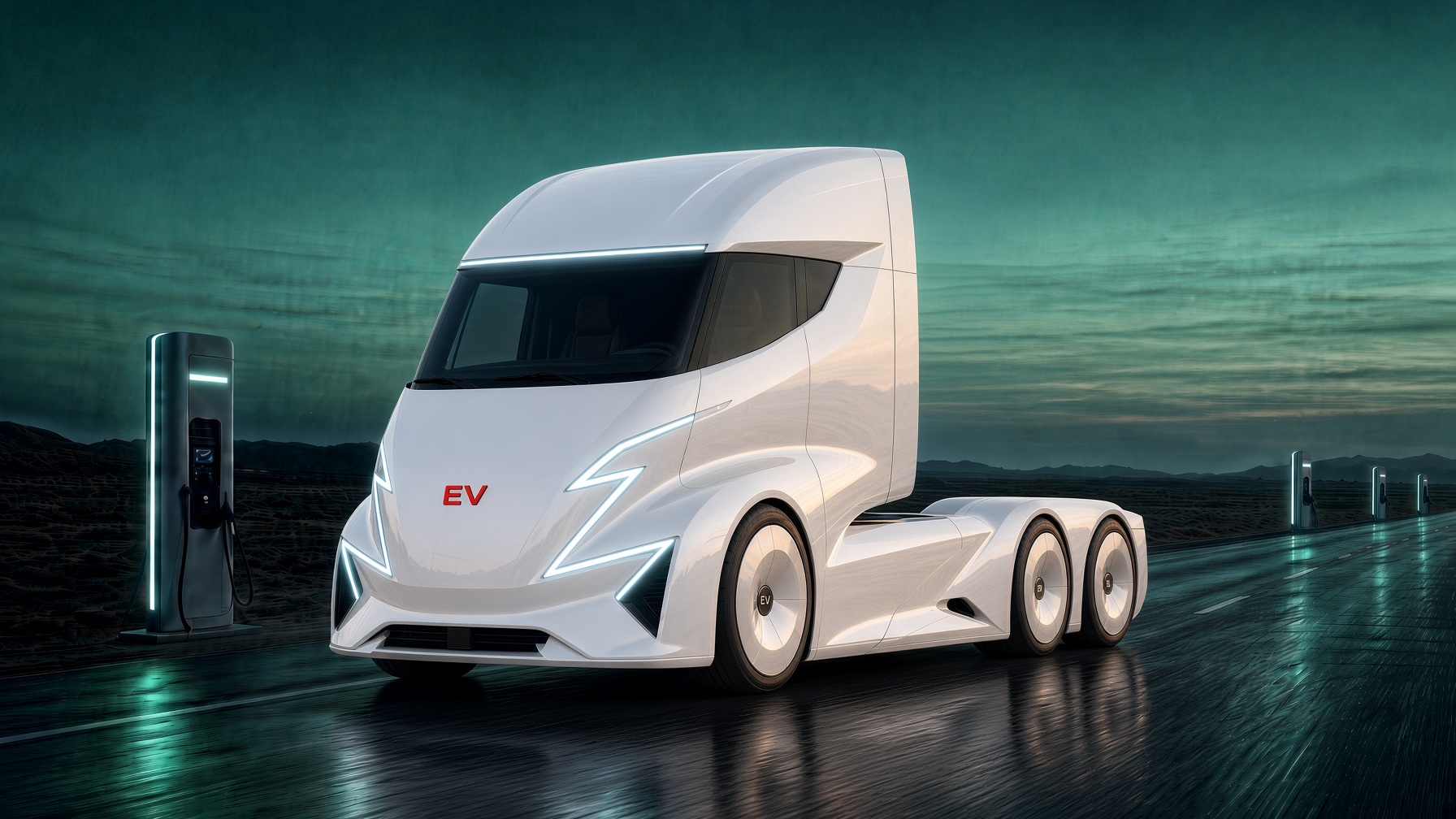
Shippers chasing zero-emission freight keep asking the same question: if we hire an Electric Semi, do we get carbon credits? The short answer is: it depends on which market you mean. California, the rest of the United States, and the rest of the world do not run on one system.
This is a map of those markets — and how a booked lane on EV LoadBoard actually shows up on an ESG ledger.
*Not legal, tax, or investment advice. Rules change. Ask counsel and your sustainability desk before you claim a credit.*
Three different products, one word
People say carbon credit for three different things:
- Allowance — a permit to emit one metric ton of CO2e under a cap (cap-and-trade)
- Offset / credit — a ton reduced or removed somewhere else, sold into a voluntary or compliance book
- Fuel credit — a score for cleaner fuel, like California’s Low Carbon Fuel Standard (LCFS)
Booking a Tesla Semi or Electric Semi on evloadboard.com is a real tailpipe cut on that haul. That is a Scope 3 freight reduction. It is not automatically an offset you can sell.
California: the tightest freight-relevant market
California still has the most complete carbon stack for trucking in North America.
Cap-and-trade (CARB)
The state’s cap-and-trade program (under AB 32) puts a declining cap on large covered sources. Power plants, fuel suppliers, and big industrials must hold allowances. Truckload shippers are usually not the covered entity for a single dry-van move. The fuel supplier already faced the cap when the diesel was sold.
So: hiring an electric tractor in California does not typically mint you a cap-and-trade allowance. It does cut diesel that would have been burned on your lane.
LCFS — where electric freight can score
The Low Carbon Fuel Standard is the California program that actually touches Electric Semi operations. It scores fuels by carbon intensity. Electricity used as a transportation fuel can generate LCFS credits for the fueling party (often the utility, charger host, or a registered credit generator) when the reporting is done right.
That is why megacharger location, kWh, and who owns the plug matter. The EV Semi charging map is operational first — range and stalls — but in California those plugs also sit inside an LCFS story.
Oregon and Washington run similar clean-fuel programs. They are not clones of CARB, but the idea is the same: cleaner megajoules earn credits; diesel does not.
Nationwide U.S.: mostly voluntary, plus patches of compliance
There is no U.S. federal cap-and-trade for trucking. What you have instead:
- Voluntary carbon markets — Verra, Gold Standard, American Carbon Registry, and others. Companies buy offsets to claim “carbon neutral shipping.” Quality varies. Additionality, leakage, and permanence are the fight. A diesel truckload plus a forest credit is not the same as an Electric Semi on the lane.
- RGGI — a power-sector cap in eastern states. It does not book your Phoenix freight.
- Tax credit and grant stack — IRA / 45W-style vehicle credits, charger funding, state HVIP-type vouchers. These lower the cost of the tractor. They are not carbon credits you post on a load.
- EPA GHG rules and CARB Advanced Clean Fleets — compliance pressure on OEMs and fleets, not a credit you sell when you book a load.
For a national shipper, the honest nationwide claim is usually: we moved this freight on a battery-electric class-8, so this lane’s tank-to-wheel emissions are ~zero, then report it as avoided Scope 3. If you also buy voluntary offsets, say so separately. Do not blend them.
Post the electric-ready freight on EV LoadBoard so the carrier that books it is actually an EV trucking company — not a diesel fleet with a brochure.
Worldwide: compliance ETS plus a messy offset trade
- EU ETS — the largest compliance market. Road freight is not in the ETS the way power and industry are; Europe is using CO2 standards, tolls, and the commercial-vehicle CO2 regulation instead. EU ETS 2 will pull fuels into a separate downstream system later this decade — watch it if you run EU lanes.
- UK ETS — UK’s post-Brexit cap. Similar logic: not a DAT-style load credit.
- China national ETS — started in power, expanding. Relevant if your ocean or air partners already report there; not how a U.S. Electric Semi books Houston–Dallas.
- Paris Agreement Article 6 — country-to-country transfer of mitigation outcomes. Slow, political, and not what a broker clicks when they tender a load.
- CORSIA — aviation offsets. Different mode, same vocabulary problem: “credit” does not mean “this container went electric.”
- Voluntary global supply — the same integrity debate as in the U.S., plus mixed national registries.
If you ship internationally, keep in-sector cuts (electric truck, electric rail, sail-assist ocean) on one line and offsets on another. Buyers and regulators are getting better at spotting stacked claims.
What a shipper should actually do
- Cut the diesel on the lane — tender Electric Semi freight at evloadboard.com. Find the truck, book it, keep the capacity.
- Measure tank-to-wheel — miles, weight, and “electric tractor” on the tender. EV LoadBoard already shows miles and charge along the route.
- Do not invent a credit — unless your LCFS/CFR registrant or a verified project actually issued one.
- California loads — ask who generates LCFS on the kWh. The carrier, the site host, and the utility may already have a split.
- ESG report — report avoided freight emissions as operations, not as a purchased offset, unless you purchased one.
The loadboard version
Carbon markets will keep splitting: California fuel credits, U.S. voluntary tons, European allowances. Freight still moves one trailer at a time.
The part you control this week is simple. Put the load on EV LoadBoard, let an EV Semi-trucking company book it, and put zero-emission miles on the bill. That is the charge that shows up in the real world — whether or not a registry ever prints a serial number for it.